
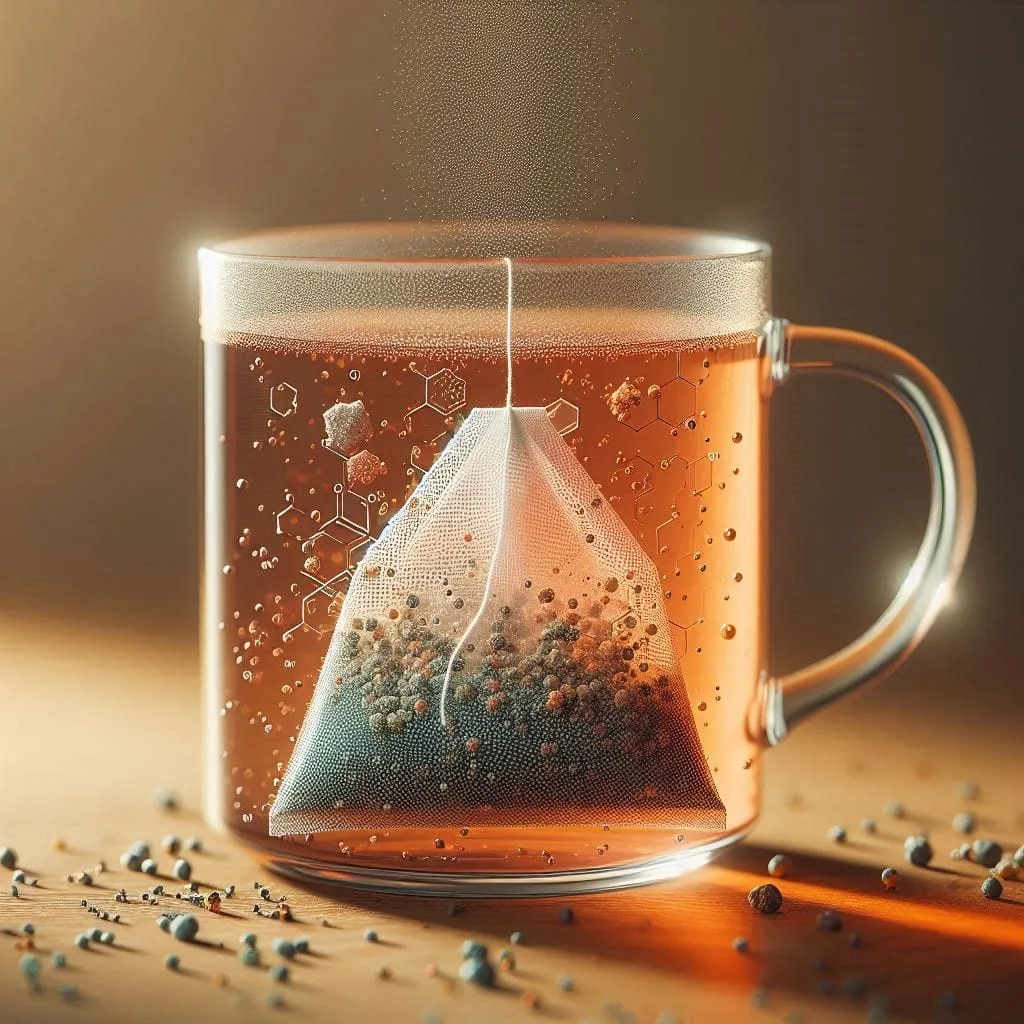
 | Teabags release billions of microplastics into our tea beveragesA recent study found that commercially available teabags made from nylon, polypropylene, and cellulose release billions of micro- and nano-plastics into a single cup of tea. Teabags release billions of microplastics iinto our tea beveragesTeabags release billions of microplastics iinto our tea beverages A recent study found that commercially available teabags made from nylon, polypropylene, and cellulose release billions of micro- and nano-plastics into a single cup of tea. Teabags release billions of microplastics into our tea beverages. A recent study found that commercially available teabags made from nylon, polypropylene, and cellulose release billions of micro- and nano-plastics into a single cup of tea. • Polypropylene teabags released 1.20 billion particles/mL In lab experiments, researchers exposed human intestinal cells to microplastic particles and found that different types of plastic interacted with different cell types. Polypropylene particles were absorbed by mucus-producing cells, while cellulose particles were absorbed by two types of mucus-producing cells. Nylon particles, however, were taken up by cells that help maintain the gut's protective barrier but don’t produce mucus. These findings suggest that different types of plastics interact uniquely with gut cells, potentially affecting gut health in distinct ways. While the long-term effects of micro- and nanoplastic exposure remain unclear, it’s evident that these particles are entering our bodies through multiple sources. You might consider switching to loose-leaf tea to reduce exposure if you're a tea drinker. |